How Does Motorcycle Insurance Differ from Car Insurance?

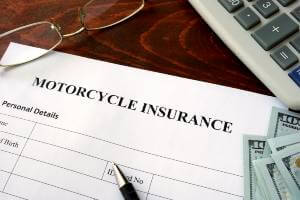
desk with blank insurance applicationThere is one major difference between car insurance and motorcycle insurance in Minnesota: personal injury protection coverage. Learn how this can affect you after a crash with another vehicle.
It is important to carefully consider the coverages and coverage limits you should purchase when buying insurance. If you do not purchase enough coverage, you may be stuck paying medical bills and other expenses out of your own pocket. Medical bills from an accident can be difficult to afford, particularly when you cannot work because of a severe injury.

If you are struggling to obtain compensation after a car crash, call TSR Injury Law to schedule a free consultation. We have helped numerous car crash victims obtain compensation after an accident.

Personal Injury Protection Insurance

Minnesota is a no-fault state, which means car accident victims must turn to their own auto insurance, under the personal injury protection (PIP) coverage, no matter who is at fault for the crash.  PIP will cover medical bills, wage loss, funeral costs and costs to hire someone to perform household activities.

Minnesota mandates a minimum of $40,000 ($20,000.00 medical and $20,000.00 wage) in (PIP), but many people purchase more than the minimum required by law.

Unfortunately, Minnesota does not require motorcyclists to purchase this coverage and in fact most insurance carriers do not even sell PIP for motorcycles  (There is a small substitute for PIP for motorcycles.  It is called Medical Payments coverage (medpay).  Medpay is only for medical bills and is sold from $1,000.00 to $5,000.00 in coverages.)  Insurers are only required to provide liability insurance for motorcyclists. Liability insurance is intended to provide compensation to victims of an accident that you cause. Even if you have PIP coverage on an automobile, you cannot use it if you were injured while riding a motorcycle you own.  There is an obscure loophole if you are a passenger on a non-owned motorcycle that TSR attorneys may be able to use for your case.

The legal rationale motorcycles do not require PIP coverage is because according to Minnesota’s No-Fault Automobile Insurance Act, a motorcycle is not considered a motor vehicle. The PIP insurance mandated by this law only apply to injuries or losses that arise from the use or maintenance of a motor vehicle.

Uninsured and Underinsured Motorist Coverage

There is no telling how much insurance coverage the other driver who caused your motorcycle crash may have, or if the other driver will even have insurance coverage. Even though Minnesota requires drivers to have minimum coverage, many ignore this law. Some drivers forget to pay their premium and their coverage lapses, or they simply cannot afford insurance on top of a car payment.

No matter if you purchase medpay for your motorcycle, you should strongly consider purchasing uninsured motorist coverage to protect you if the other driver does not have insurance. (You should strongly consider purchasing both medpay and uninsured motorist coverage, as motorcycle crashes often result in significant injuries that require expensive treatment.)

Since you can only file a lawsuit for crash damages in certain situations, you may not be able to rely on filing a lawsuit to recover compensation. Even if you can file a lawsuit, if someone does not have insurance coverage, it is unlikely they will have many assets for your Minneapolis motorcycle accident attorney to go after.

Other Coverages You Should Consider

There are a variety of other coverages you can purchase for your motorcycle to help cover damages from a crash or other situation:

Collision

This provides compensation for damage to your motorcycle if you are involved in a crash with another driver or other hazards, like signs, trees or cars that are parked. You may also be able to obtain compensation to repair or replace your helmet if it gets damaged in the crash.

Comprehensive

In a no-contact accident, there might not be anyone to pursue compensation from, unless you can file a claim against the entity responsible for maintaining the road where you crashed. This is where comprehensive coverage comes in. You may be able to file a claim for compensation for a no-contact accident, such as a crash caused by falling debris or damage to your bike because of a pothole or vandalism.

Get Help Pursuing Compensation for a Motorcycle Crash

Our trusted attorneys are here to help crash victims who need compensation for the cost of medical care and other damages they may have suffered. The initial meeting with our lawyers is free of charge, as we know a crash can result in a financial crisis for many people.

Unless we recover compensation for your claim, there are no attorney fees. That means no risk to you in talking to us about your potential legal options.

Have questions and need help after a crash? Call us today at: (612) TSR-TIME

Determining Liability When a Pedestrian is Injured in a Crash

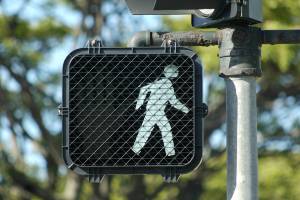
walk signal at crosswalkWhile everyone who is sharing the road needs to cautious, pedestrians need to be particularly careful because they have no seat belts, airbags or other safety measures to protect them in a crash. Pedestrians should not assume drivers see them and should stay hyperaware of traffic around them.

If pedestrians are not careful, they could not only get seriously injured, but also be found partially at fault for the crash. Below, learn more about liability in pedestrian crashes and why it may not always be so simple to determine who is at fault.

Responsibilities of Drivers and Pedestrians

As a pedestrian, state law requires you to take certain steps when you do things like cross the street. These measures are meant to reduce the risk of a dangerous crash.

For example, just like drivers, you are subject to the traffic-control signals at all intersections. If there is no signal at your intersection, drivers are required to yield to you when you cross the street in a marked crosswalk or at an intersection with no marked crosswalk.

When a pedestrian is crossing, the driver is required to remain stopped until the pedestrian has crossed the lane where the vehicle is stopped. No cars behind the lead car can pull out and attempt to overtake the lead car while a pedestrian is crossing.

It is illegal for you as a pedestrian to suddenly step off the curb or another area of safety and walk or run into a vehicle’s path when it is impossible for the driver to yield.

If you cross the road outside of an intersection, you must yield the right-of-way to all approaching vehicles. However, it is illegal to cross between adjacent intersections that both have working traffic-control signals.

If you are walking along a roadway, or in a wheelchair along a roadway, you must, when it is practical, move on the left side of the roadway or shoulder giving way to oncoming traffic. However, it is illegal to walk along the road when a sidewalk is accessible.

Fault When a Crash Occurs

Pedestrian crashes are often caused by negligent drivers. For example, they may run a red light and hit a pedestrian crossing the street. Drivers could also hit pedestrians while making a right turn on a red light and failing to yield.  This scenario occurs often because drivers look left for oncoming traffic as they turn right.  The drivers fail to also look to the right before they proceed.

However, there are times when pedestrians could be to blame. Jaywalking, which refers to crossing the street outside of a crosswalk, could result in the pedestrian being found partially at fault. When crosswalks are available, pedestrians need to use them, as they are designed to get the attention of motorists to help prevent crashes.

Pedestrians should also avoid running out into the street, particularly from between two parked cars. It can be very difficult for drivers to see pedestrians and they may not have enough time to slow down or swerve to avoid a collision.

Even if you are not hit by a car, if the driver is forced to take evasive action to avoid a crash and he or she hits other vehicles or a fixed object, you could potentially be found partially liable for the driver’s damages.

Can At-Fault Pedestrians Seek Compensation?

It is very important to note you can still seek compensation if you are partially at fault for a crash. At the scene, be careful not to admit fault. If the insurance company calls you, avoid admitting fault.  The Minnesota rule is if you are less than %50 at fault you can be compensated for the injuries you receive.

Even though you may be somewhat to blame for the crash, it is better to let the investigation play out. If you say it was your fault from the start, it may be more difficult to refute this later.

The attorneys at TSR Injury Law are prepared to review your situation in a free consultation to determine if you may have been at fault and if you may still be eligible to seek compensation. Even if you have some fault, we are committed to building a strong case to try to prevent the insurance company from assigning you more fault than you deserve.

Injured in a Pedestrian Crash? Call TSR Injury Law for a Free Consultation

Your injuries could affect you for a long time – potentially the rest of your life. That is why talking to an experienced attorney is so important during this difficult time. He or she may be able to secure compensation for your medical treatment and other damages.

Our Bloomington auto accident lawyers offer a free, no-obligation legal consultation. That means there is no risk to you in reaching out to find out how we may be able to help. Our firm has recovered $1 billion in compensation on behalf of our clients.

We are not paid unless you get paid. Call (612) TSR-TIME today.

TSR Staff Volunteered for We Push for Peace to Help Those in Need

At TSR Injury Law, we not only help injury victims in our community with their legal needs, we also make sure to try to give back to the communities where we live and work.

Last week, members of our legal team volunteered with the organization We Push for Peace. We gave our employees the option of a paid day off to go out into the community and volunteer. We donated food and hygiene supplies, packed them up and gave to those in the community who are in need.

We Push for Peace is a nonprofit started by Trahern Pollard to advocate for and be a resource to people in the inner city. Lately, this organization has been continuing to help those affected by COVID-19 while pushing for the justice, accountability and change the community needs in the wake of the death of George Floyd.

To learn more about the organization, we encourage you to visit their website.

TSR Injury Law. Trusted. Local. Lawyers.

What is a Soft-Tissue Injury Claim Worth?

stretching out a knee ligamentCar crashes can cause a variety of soft-tissue injuries, depending on the type and speed of the crash and the point of impact. While many people may take these injuries less seriously than things like broken bones or internal injuries, they can often cause long-lasting pain and suffering, limited mobility, and other medical problems.

Below, learn more about how attorneys evaluate these injuries to determine the value of the economic and non-economic damages they can cause.

If you were injured in a crash, you should seek immediate medical attention as you may not notice signs of a soft-tissue injury immediately afterward. If you wait, the injury could get much worse and your recovery may take longer. After seeking treatment, contacting a lawyer is an important step as you pursue fair compensation.

Soft-Tissue Injuries That Often Result from Crashes

A soft-tissue injury is one that affects the ligaments, tendons or muscles.  These ligaments, muscles or tendons are in the neck, back, knees, elbows or shoulders. These body parts can become strained, sprained or torn, resulting in significant pain, limited mobility and other problems.

Some common examples of soft-tissue injuries include:

  • Whiplash – This is an injury to the neck that often occurs in rear-end accidents. The driver’s head and neck are jolted forward by the impact and suddenly stopped, often because of the seat belt or airbag. This can lead to severe pain, headaches, dizziness, tingling in the arms and stiffness in the neck. Whiplash could affect you for months or even years.
  • Contusions – These are severe bruises that may result from a body part hitting the steering wheel, airbag, dashboard or door. You could experience pain or swelling and limited mobility around the contusion.
  • Sprains – This refers to twisting or overextension of joint ligaments. Whiplash could be considered a type of sprain.
  • Strains – This is like a sprain except the muscle or tendon can be stretched or partially torn. Symptoms can include pain, weakness, swelling, inflammation and cramping.

Evaluating Soft-Tissue Injury Damages

One of the main factors in the value of a soft-tissue injury claim is the medical bills for past and future treatment for your injury. For example, you may need to see a chiropractor and/or physical therapist to help you regain mobility, strength and function in the injured area. You may also need to get X-rays, MRIs or other tests to diagnose your injury and the body parts that are affected.

Pain from your injury may require prescription medication, along with crutches or braces to deal with limited mobility.

It is important to hire an attorney with the resources to thoroughly evaluate your damages. For example, your lawyer may need to consult a medical expert to determine the treatment you may need and how long you may need it. An experienced attorney can also be beneficial to your claim because he or she will have helped many other crash victims determine the value of their damages.

Another important factor in the value of a soft-tissue injury claim is the pain and suffering you experience on a daily basis. There is no defined value of pain and suffering. The value of these damages is determined on a case-by-case basis.

There are two common ways attorneys and insurance companies may calculate pain and suffering. For example, they may add up all your economic damages (medical bills, lost wages, property damage) and multiply this total by a number, often something between one and five. Another way is to determine a daily value of your pain and suffering and multiply that by the number of days of pain you are likely to experience.  Years of experience help attorneys compare past settlements and verdicts to current cases and create a fair understanding of the legal value of the injury.

Your attorney will also need to consider other factors, such as whether your condition is likely to get worse over time and how effective future treatment may be.

Call Today to Set Up a Free Consultation About Your Soft-Tissue Injury

You may have many questions after suffering an injury in a car crash, including questions about taking legal action to obtain compensation for the damages you suffered.

That is why meeting with an attorney for a free consultation can be an important step to take. The Minneapolis personal injury attorneys at TSR Injury Law have a proven track record of recovering fair compensation for crash victims. Over more than two decades serving Minnesota injury victims, we have obtained over a billion in compensation.

There are no upfront fees for our services, as we are no paid for representing our clients unless we obtain compensation on their behalf.

Have questions? TSR Injury Law is here to help. Call (612) TSR-TIME.

How Important is the Police Report After a Car Crash?

One of the first thoughts many car crash victims have in the moments after the crash is about calling the police. Victims want police officers at the scene to investigate, issue traffic citations and complete a report on the crash.

While it is true that it is important to call the police after a crash, particularly if you want to have a chance of obtaining compensation for your vehicle or body damages, there are limitations to police reports. Below, learn more about how police reports can help car crash claims and some of the limitations.

Our Bloomington auto accident attorneys offer a free legal consultation to discuss your crash and the damages you have suffered. We understand what car crash victims go through because we have helped so many obtain compensation for car crash damages. The consultation is free and comes with no legal obligations, which means no risk to you.

How a Police Report Could Help Your Claim

A police report provides an unbiased, third-party account of a crash, and police officers’ accounts of crashes are often considered reliable. People who witnessed the crash are also more likely to talk to police officers about what they saw because they often trust the police.  The witness’ recollection is also best right after the crash versus several weeks or months later.  The at fault party may also “admit” what they did at the crash scene, but later have a change of heart and start to forget or change their story.

Police reports provide basic details about the situation, including things like the weather, date, time, damage to the vehicles, road conditions in the area, traffic citations that were issued and contact information for witnesses. Sometimes police reports contain the responding officer’s opinion about who was at fault for the crash.

Police reports are often used in the insurance claims process, as they provide a lot of information that can be used in your demand letter for compensation.

While every insurance policy is unique, there may be a requirement to file a police report in order to obtain compensation. In fact, there are several Minnesota policies that will not allow a claim unless a police report is filed.  The State of Minnesota also requires you to file a police report when a crash fits certain criteria.

However, even if you are unsure if the crash fits these criteria, you should err on the side of caution and call the police anyway. Your injuries could be much worse than you initially realize. Crash victims have a tendency to minimize the severity of their injuries, unless there is a lot of blood or there are broken bones.   Even a basic description of an injury at the crash scene helps explain later pain and treatment that was needed.  Of course, medical records will have details about the injury, but the report can buttress the other records.

A police report helps to connect your injury to the crash. Without a police report, the insurance company is likely to question whether your injury happened in the crash or in another incident.

Limitations of Police Reports

Unfortunately, police reports generally cannot be admitted as evidence in a trial. These documents are considered hearsay, as the police officer has no direct knowledge of the crash. The report is not as reliable as an account from someone who was either involved in the incident or actually witnessed it.   However, the police report can be used to refresh an officer’s memory, so they can testify with a better memory of the events that usually took place years before.

While there are limitations to a police report, most car crash claims are resolved through an insurance company settlement. That means most crash victims do not need to go to trial to recover compensation for their damages.

Injured in a Car Crash? Call Today to Discuss Your Situation with a Licensed Lawyer

After calling the police and seeing a doctor, an important next step is talking to an experienced attorney about your crash. You may be eligible for compensation for damages as the crash may have been caused by another driver’s negligence, such as drunk or distracted driving.

Your free initial consultation is a chance to learn more about how we may be able to assist you during this difficult time. You are not under any obligation to hire our attorneys to represent you if we validate your claim. That means no risk to you in meeting with us.

Call us as soon as possible to set up a free legal consultation. Phone: (612) TSR-TIME.

Blue Bell Creameries to Plead Guilty, Pay $19.35M for Shipping Contaminated Products

empty courtroom view from judge's seatOn May 1, the U.S. Justice Department announced Blue Bell Creameries pled guilty and agreed to pay $19.35 million for shipping contaminated products that were linked to an outbreak of listeriosis in 2015. The guilty plea covers two misdemeanor counts of distributing ice cream products that had been tampered with.

Blue Bell has also agreed to pay $2.1 million for resolving civil claims related to making ice cream in unsanitary conditions and selling it to federal facilities, which violated the False Claims Act.

The former president of Blue Bell, Paul Kruse, is also facing charges of taking part in a scheme to conceal the outbreak from customers.

According to the Department of Justice, Blue Bell distributed ice cream made in unsanitary conditions and was contaminated with Listeria monocytogenes, which can be life-threatening.

What Blue Bell Did After Learning of the Outbreak of Listeria

In early 2015, Blue Bell was notified by state officials about two products from a factory in Texas that tested positive for Listeria monocytogenes.

To its credit, Blue Bell took action to remove the remaining two products from store shelves. However, the company did not recall the contaminated products or provide a warning to consumers, even after state officials in Texas discovered listeria in a third product.

Blue Bell did not issue a recall until there were 10 reported cases of listeria in four states. Three of those who were reportedly sick in Kansas ended up dying.

The company released a statement saying the plea deal concerned things that happened five years ago before facilities were closed and revamped. The company also apologized to customers, employees and the communities where they work and live.

The lawyer for former president Kruse said the former president is innocent and he and other employees did the best they possibly could with the information they had back in 2015.

Have You Been Injured by a Defective Product?

Our Bloomington defective product lawyers offer a free consultation to discuss your situation. You may be eligible to seek compensation for the damages you suffered. There is no obligation to take legal action after meeting with us.

We have obtained over a billion in compensation on behalf of our clients and we do not get paid unless our clients are paid first.

Schedule your free consultation today by calling (612) TSR-TIME.

Nursing Home Industry Seeking Immunity from COVID-19 Lawsuits

Current image: walking frame next to an empty bed

Nursing home residents are at high risk for suffering fatal complications if they contract COVID-19, which is why more than 12,000 residents have died after contracting the virus.

Part of the reason for the spread of the virus in these facilities could be nursing home negligence, which is why the industry has been pushing for immunity from lawsuits. So far, several states have granted nursing homes explicit immunity from COVID-19 lawsuits. Several other states have also granted some level of immunity for health care providers, which may include nursing home workers.

States where nursing homes could be immune from lawsuits over COVID-19 negligence include:

  • New York
  • Alabama
  • Arizona
  • Connecticut
  • Georgia
  • Illinois
  • Kentucky
  • Massachusetts
  • Michigan
  • Mississippi
  • New Jersey
  • Nevada
  • Rhode Island
  • Vermont
  • Wisconsin
  • Virginia

Massachusetts and New York passed laws that specifically give immunity to nursing homes. Meanwhile, the governors of Connecticut, Georgia, Michigan and New Jersey issued executive orders providing immunity. The governors of Illinois and Arizona signed executive orders providing broad immunity to health care providers. Laws were passed in Louisiana, Kentucky and Wisconsin providing immunity for health care providers.

The definition of the term health care provider is crucial in states that provided immunity to these professionals. Victims and their lawyers will likely challenge these laws and executive orders based on the definition of a health care provider.

The American Health Care Association (AHCA) is leading the national lobbying effort for immunity for nursing homes. The AHCA has spent $23 million on lobbying efforts over the past six years.

Immunity could allow nursing homes to avoid liability for extreme negligence that allowed the spread of the virus. Federal records show almost 62 percent of nursing homes were cited for infection prevention and control lapses in 2019.

The daughter of one nursing home resident in New Jersey was not informed about her mother’s COVID-19 diagnosis. The daughter had to demand her mother be transferred to a hospital, where she was placed in intensive care. The nursing home in question is now under investigation by the New Jersey attorney general.

Most nursing homes are closed to the public and have strict limitations on visitors during this pandemic. The lack of ombudsmen, surveyors and enforcement of rules, along with immunity could be a very dangerous combination, according to the Center for Medicare Advocacy.

Nearly 70 percent of the more than 15,000 nursing homes in the U.S. are run by for-profit companies, and more than half are run by chains.

Has Your Loved One Been a Victim of Nursing Home Negligence?

Our Bloomington nursing home abuse lawyers offer a free legal consultation to discuss the situation. There is no obligation on you to take legal action. Our attorneys are not paid unless you receive compensation at the end of the legal process.

We are also able to handle your case in the way that is most convenient for you, which means there is no need for a face-to-face meeting. We are committed to protecting our community and sticking to social distancing guidelines to prevent the spread of the virus.

Call us anytime to schedule your free legal consultation. Phone: (612) TSR-TIME.

TSR Injury Law Support Hunger Solutions Minnesota During COVID-19 Pandemic

Current image: Stack of Takeout Boxes Social

Our firm is supporting Hunger Solutions Minnesota, which is the only anti-hunger organization providing services in every county in the state. Organizations like these are critical right now, as millions are unemployed or are unable to work and may be struggling to provide food for themselves and their families.

As our social safety net is challenged because of the COVID-19 pandemic, Hunger Solutions Minnesota and other organizations like it become extremely important.

About Hunger Solutions Minnesota

Hunger Solutions Minnesota works with the state and federal government to support programs tackling hunger on a large scale. This includes working with food banks that distribute food. This organization also works to connect hungry people with local help.   

Thank you to these organizations and the individuals on the front lines during this crisis.

Liability in Right-Turn Car Crash Claims in Minneapolis

white arrow painted on roadWhile left turns are more dangerous, plenty of crashes occur when drivers turn right. One way this could happen is if drivers pull out into traffic at the wrong time, especially if the approaching driver is speeding.

The Minneapolis car crash lawyers at TSR Injury Law discuss who is at fault in a right-turn accident in Minneapolis. Many factors must be evaluated, including whether the driver in the oncoming car may be partially at fault.

Insurance companies like to blame victims of these crashes, which is why you need an experienced lawyer to manage your case. At TSR, our services come with no upfront fees. We are not paid unless our clients get paid.

Contact us after a crash to set up a free consultation. Call (612) TSR-TIME.

What is a Right-Turn Accident?

Right-turn accidents may occur when one driver attempts to make a right turn and collides with an oncoming car. These crashes usually happen at intersections, but they are also common in parking lots.

What Causes Right-Turn Crashes in Minneapolis?

Right-turn crashes are typically the result of a driver turning into oncoming traffic. While the driver may have checked for traffic, he or she misjudged the time needed to make the turn or the distance his or her vehicle was from oncoming traffic. Drivers may often make these mistakes when they are distracted or in a rush.

Even when drivers know oncoming traffic is a little too close, they may try to make the turn as fast as possible. Unfortunately, oncoming vehicles might not be able to slow down or stop in time. Some drivers make the turn and slowly accelerate, making it that much harder for oncoming drivers to avoid a collision.

Oncoming drivers may cause right-turn accidents because they are distracted or going over the speed limit. Sometimes an oncoming driver could cause a right-turn crash by changing lanes while a driver starts to turn. In this situation, the right-turning driver might not have seen the oncoming vehicle changing lanes in time to stop.

While victims in right-turn crashes are often drivers, pedestrians and bicyclists could also get hit by a car making a right turn. Drivers must look for bicyclists and pedestrians, especially in blind spots, when pulling forward to make a right turn.

If a driver blocks a crosswalk, he or she could force pedestrians and bicyclists to move out into the intersection to continue crossing the street, putting them at risk of getting hit by oncoming cars.

Sometimes right-turning drivers look left for oncoming traffic but fail to also look right for pedestrians who are in the crosswalk.

Who is Usually at Fault in a Car Crash?

The driver who broke the rules of the road is often found at fault for a car crash. For example, maybe the driver exceeded the speed limit, ran a red light, violated another driver’s right of way, or followed another car too closely. If one of the drivers involved in a car is issued a citation by the police, that driver is probably going to bear most, if not all, of the fault for the accident.

How Does Minnesota Assign Fault For a Right-Turn Crash?

In Minnesota, fault for car crashes and other types of personal injury accidents is assigned based on negligence. The negligent at-fault party can be held liable for damages.

Negligence refers to a breach of a duty of care, such as the duty to obey the speed limit and other rules of the road. The breach of duty must be the cause of the crash. The crash must also be directly linked to the injuries and damages suffered by the victim.

It is important to remember that Minnesota is a no-fault state when it comes to car accident claims. That means victims first seek compensation from the no-fault coverage in their own insurance policies, no matter who caused the crash.

The other driver may still be at fault. However, victims cannot step outside of the no-fault system to file a liability claim or lawsuit unless their injuries and damages cross a certain threshold.

What You Need to Know About Fault For a Minneapolis Right-Turn Collision?

Many right-turn accidents happen when drivers attempt to turn right on a red light. The driver who was turning right is usually at fault because oncoming traffic has the right of way and turning drivers must yield. Turning drivers can also be at fault if they get into a crash while turning at an intersection where red light turns are prohibited.

These are the general rules about fault for right-turn crashes. However, there are exceptions when oncoming drivers may be at fault.

For example, if an oncoming driver was speeding, he or she might be partially at fault. If an oncoming driver changed lanes while in the intersection and crashed into a right-turning driver, he or she could be at least partially liable for damages.

Sometimes a driver turning right on a green light may get hit by an oncoming driver who ran a red light. In this situation, the red-light running driver could be held fully liable for the crash.

Oncoming drivers could also share fault for a right-turn crash if they were distracted. For example, maybe an oncoming driver was texting while going through an intersection. Even though the right-turning driver did not have the right of way, the distracted driver may be partially at fault.

What Happens if the Parties in a Crash Are Partially at Fault?

In Minnesota, you can pursue compensation after a car crash if you are less than 50 percent at fault for what happened. In other words, if you are more at fault than the other driver, you are barred from recovering compensation for your injuries or vehicle damages.

If you are found partially at fault, but less than 50 percent, the total value of your compensation will be reduced according to the percentage of fault you are assigned. An example of this is if a driver was found to be 10 percent at fault for a crash due to speeding. This individual would see any compensation awarded reduced by 10 percent.

Even if you believe you are partially at fault for the crash, you should discuss your situation with a licensed attorney. You should not rely on the insurance company to make an accurate assessment of your fault for a crash. Insurers often try to assign more fault for a crash than should rightly be assigned. Insurers are for-profit businesses and will look for any way to reduce the amount of compensation paid to crash victims.

What You Should Do After a Right-Turn Accident

If you were injured in a right-turn car crash in Minnesota, there are steps you should take for your health and safety, as well as your potential legal claim.

Dial 9-1-1

Tell the dispatcher what happened and that you need assistance. The dispatcher can help you determine if you need an ambulance to join the police at the scene. When the police arrive, they can help secure the area. That way oncoming traffic will not be too close to you or the other driver. The police can also investigate the accident, talk to you and the other driver, and draft an accident report.

Move Your Vehicle Out of the Flow of Traffic

If possible, move your vehicle out of the flow of traffic. The last thing you want is to get hit by an oncoming car. You may want to turn your hazard lights on to help alert approaching drivers to your stopped vehicle.

Be careful about exiting your vehicle. You do not want to be walking too close to passing traffic. You could get clipped by a car and suffer further injury.

Document the Crash Scene

This is not your highest priority. Your lawyer can gather evidence on your behalf. However, if possible, you can take pictures just minutes after the crash. You can also exchange information with the other driver, including insurance information. If there are any witnesses, you can note their names and contact information.

You should only take these steps if it is safe to get out of your car and walk around the crash site. You do not want to be up walking around if you think you might aggravate your injuries.

Go to the Hospital For Treatment

It is generally best to go straight to the hospital from the scene of the crash. You might think your injuries will heal on their own, but you could be wrong. For instance, severe internal injuries after a crash are extremely common. You should never take any car crash injury lightly.

Right-turn crashes can cause severe injuries, including:

  • Traumatic brain injuries
  • Whiplash
  • Spinal cord damage
  • Back injuries
  • Rotator cuff injuries
  • Shoulder injuries
  • Hip injuries
  • And more

You need to seek immediate medical treatment after your right-turn crash so your injuries can be diagnosed and stabilized. This is not only important for your health, but also for your potential compensation claim. Seeking immediate treatment demonstrates a connection between your injury and the crash.

Avoid Saying Too Much to the Insurance Company

If the insurance company calls you after a right-turn crash, you should avoid revealing too much. You can write down what you remember about the crash as soon as possible and discuss things with an attorney before talking to the insurance company. If you wait to write down what you remember, you could easily forget.

Contact an Experienced Attorney

Consulting with an attorney before giving an insurance statement could greatly benefit a crash victim. Since the consultation is free, there is no reason not to seek legal help before talking to an insurance company.

The attorneys at TSR Injury Law have many years of combined experience helping victims of a variety of crashes. We know how to assess whether you have a valid claim and whether you may be partially at fault for a crash.

We are prepared to seek maximum compensation for the damages you suffered in your right-turn crash, which could include:

  • Medical treatment right after the crash
  • Follow-up medical care
  • Lost wages
  • Loss of earning capacity
  • Future medical care
  • Prescription medications
  • Medical testing
  • Pain and suffering
  • And more

Have Questions About Legal Options? Call TSR Injury Law Today

We understand crash victims often have a lot of questions about the legal process. We have helped numerous crash victims over more than 20 years in practice, recovering millions in compensation on their behalf.

There is no cost or obligation to meet with us to discuss your crash and whether you may have a valid claim for compensation. We welcome your call, and there is no risk to you.

Even if you were partially to blame for a right-turn crash, you may still be eligible to pursue compensation.

Call (612) TSR-TIME or fill out an online form and we will be in touch shortly.

Should I Expect a Delay in My Injury Claim Because of the Coronavirus?

front of an empty courtroomThere are many unknowns with the coronavirus and the many ways it has affected the economy, along with businesses and public services like the courts. Injury victims may be concerned about delays in being able to pursue compensation.

Below, learn more about how the pandemic could cause delays in your insurance claim or court case. While there is uncertainty, it is still important to reach out to an attorney as soon as possible. First and foremost, an attorney can help determine if you have a valid case. If you do, your attorney can get to work investigating, which takes time.

Possible Delays with Insurance Companies

While you may not think of an insurance company as a business the same way you would a restaurant or grocery store, insurance companies still need to make a profit to stay in business. As businesses and individuals are strapped for cash and may be struggling to pay their premiums, insurance companies are not in a rush to pay claims.

Insurance companies may also drag their feet on processing claims, hoping victims will end up accepting a lowball settlement offer out of desperation. Many people are unemployed or working fewer hours because of the pandemic, and they are becoming increasingly desperate for money the longer they are under stay-at-home orders in their states.

However, you should not delay pursuing insurance compensation, even if the process may be delayed because of the pandemic. Starting the process quickly helps connect your injuries and damages to the accident.

Our lawyers are prepared to manage the entire insurance claims process on your behalf. This includes filing the claim and communicating with the insurance company on your behalf to protect the value of your claim.  TSR Injury Law is set up to start and prosecute your injury claim without meeting face to face.

Can I Still Receive Medical Treatment?

Hospitals are still treating patients for conditions besides coronavirus. If you are concerned about possibly contracting the virus at the hospital, contact them to find out what you can do to help reduce your risk, such as wearing a mask and keeping your distance from others as much as possible.

If there are delays, it is important to remember that they are not your fault. Be sure to document appointments with doctors, including when you had to reschedule an appointment to refute insurance company arguments about gaps in your medical care. This includes virtual meetings with doctors through Skype, Facetime, Zoom or other platforms. Even though you are not physically in the room with the doctor, you can discuss your symptoms so they can be documented in your medical records.

As you may struggle to obtain all the treatment you need, it may take longer to reach the point of maximum medical improvement. This could delay the settlement of your claim. However, it is best to wait until this point to settle, if you can afford to do so.

This is a complex issue you can discuss with one of our Bloomington personal injury lawyers in a free legal consultation.

Are the Courts Still Open?

Public access to the courts has been limited because of the coronavirus. Access to these facilities will be subject to conditions set by county officials.

However, no jury trials can begin before May 4 or until further order of the court, whichever happens first. Unless a proceeding is required to occur in a courtroom, court proceedings must be done by ITV or remote technology that permits attorneys and parties to appear without actually being in the courtroom.

District and appellate courts will continue accepting filings of all case types. These filings may need to be done electronically.

Call Today to Set Up Your Free, No-Risk Legal Consultation

Our firm has a proven track record of recovering over $1 billion on behalf of our clients. We have extensive knowledge of Minnesota laws and the legal process, and a legal team ready to aggressively pursue maximum compensation for your damages.

Our licensed attorneys do not charge legal fees unless we recover compensation. The consultation is also free and there is no obligation for you to take legal action. As we are practicing social distancing to prevent the spread of COVID-19, we can do the consultation over the phone and manage your case remotely, so you do not need to come into the office.

Call today to learn more about how we assist injury victims in their time of need. (612) TSR-TIME

How Can Evidence be Preserved After an Accident

snapping photos of damage from a crashThere is often a lot of uncertainty after a personal injury occurs. Victims may have many questions: Will I ever fully recover? How will I pay my bills while I am out of work? Could the injury have been prevented? Is someone else at fault?

Accident victims may also have questions about what they can do to protect their potential claim for compensation, such as preserving evidence. While each situation is unique, there are steps many injury victims can take that may help strengthen their potential claim.

Below, learn more about preservation of evidence, including things attorneys can do. The Minneapolis personal injury lawyers at TSR Injury Law have decades of combined experience building robust cases on behalf of Minnesota injury victims. Learn more about our experience and results by contacting us to schedule a free consultation.

What You Can Do Right After an Accident

Your health and recovery are the top priorities after an accident. However, if it is safe to do so and you will not be making your injuries worse, take out your smartphone and take pictures at the scene. After you leave the scene, things may be altered or cleaned up, depriving you of the chance to document what things looked like in the moments after your injury occurred. You could easily forget how things looked days or even hours later.

Take as many pictures as you can. Take pictures of the hazard or dangerous condition that led to your injury (damaged road, missing handrail on a staircase, pothole in a parking lot, etc.), along with any vehicle property damage that resulted.  The other vehicle may have damage that later gets denied, so gathering proof of the damage is easy and necessary.

If your injuries are visible, take pictures of them. If your clothes were damaged, take pictures of them and keep them as they may be used as evidence later.

Were there any witnesses?  At a minimum, get their names and phone numbers to be contacted later.  Even if the police say they will collect the information, if you are able get the information yourself.  Sometimes the police reports do not document the names even when they are supposed to.

You can also record videos of your conversations with witnesses, if you ask them and they agree to be recorded.

Whenever possible, file an official police report. After a car crash, contact the police so they can file an official crash report. When another type of accident occurs, such as a boat or snowmobile crash, you may be able to file a different type of police/accident report. If you were injured on another’s property, such as in a retail store, ask the property owner or a manager or supervisor to complete an official accident report.

It can also be important to write down what you remember about the accident as soon after it happens. Try to answer general questions someone else might ask you about the accident:

  • What were you doing before you got hurt?
  • What caused you to become injured?
  • What was the at-fault party doing?

Documenting Pain and Suffering and Your Treatment

In order to recover maximum compensation, you need to keep track of your medical expenses. Keeping them all together in one place could save the stress of having to look for things later.

While the progress of your treatment will be documented in your medical records, it could also be helpful for you to keep a journal where you discuss how treatment is going in your own words. You can talk about the pain you are experiencing on a daily basis and how your injuries have affected various aspects of your life.

Writing these things down on a regular basis helps show the severity of your injuries and could help your attorneys calculate your pain and suffering when it is time to negotiate a settlement.

What if the Other Side Destroys Evidence?

The at-fault party, the insurance company, or attorneys representing the other side may not want certain evidence to come to light. There have even been cases where the other side has taken steps to get rid of evidence.

However, the other side could be punished for this by the courts. As this is a complex issue, you should strongly consider meeting with a licensed attorney to discuss.

Schedule Your Free, No-Obligation Legal Consultation Today

It is never too soon to speak to an attorney about a crash. There is limited time to take legal action and an attorney can determine if you may have a valid claim while answering your questions.

Learn more about how we may be able to assist you by calling or completing a Free Case Evaluation form to schedule your free consultation. There is no obligation to take legal action if we find you have a case. There are also no upfront fees for our services.

Our phone lines are open 24/7: (612) TSR-TIME. A representative of our firm is ready to speak with you and set up a free meeting with a licensed attorney. TSR Injury law employs retired police to help investigate cases, so allow us to lock down documentation that can help you later.

Hit-and-Run Crashes in Minneapolis Rarely Result in Arrests

road after hit and runThe police responded to more than 4,000 hit-and-run complaints in 2019 alone, unfortunately, data from the Star Tribune shows arrests were made in less than one percent of cases. The Fifth Precinct in southwest Minneapolis had the lowest arrest rate for these crashes, while all five had similar percentages of arrests.

According to police department officials and city council members, the low number of arrests is partly because of the absence of a dedicated traffic unit for high-collision areas and drunken or distracted driving or speeding. Unfortunately, the council voted down a proposal to apply for a $1.3 million federal grant to help the city with traffic enforcement.

There is an ongoing debate about whether installing traffic cameras and working to engineer safer roads would be better for increasing safety than simply adding more police officers to enforce laws.

Police Policy on Hit-and-Run Crashes

In 2012, the Minneapolis Police Department instituted a policy that hit-and-run crashes should only be investigated if there were serious injuries or fatalities. Staff cuts had forced the department’s traffic unit to focus only on the more serious crashes.

Star Tribune data shows the police arrested a suspect in just 31 of 4,234 cases, a rate of 0.7 percent. Over the past five years, the police made an arrest over a hit-and-run crash in approximately seven percent of cases. If there were injuries, the arrest rate was 10 percent.

Minneapolis PD has just four traffic investigators – for comparison, they had 24 in the late 90s. These investigators are tasked with looking into hit-and-run crashes, police pursuits and crashes involving police and other city vehicles.

However, minor hit-and-run crashes and other minor crashes are usually managed by patrol officers. All five police precincts have traffic response cars for complaints about hit-and-run crashes, drivers ignoring stop signs, or speeding in areas where children commonly play.

There has also been a shift in the approach of police officers. They are trying to be more data driven in making traffic stops. Between 2010 and 2017, traffic stops declined by about 70 percent, going from 92,400 to just 29,150.

Reasons for Hit-and-Run Crashes

According to research, alcohol and drugs are common reasons why crashes happen and why drivers may decide to leave the scene.

In some cases, those who leave may be afraid they have more to lose if they wait for the police to get there. This may be particularly true if the driver has a suspended license, arrest warrant, or lapsed insurance policy.

Some of the other reasons people may flee the scene include, weather, traffic or whether there is a nearby location for drinking alcohol.

City Campaign for Traffic Safety

Our city has started a campaign to promote traffic safety, not just for drivers, but bicyclists and pedestrians as well.

In March, city officials revealed the speed limits on arterial and residential streets will be reduced next year as part of the Vision Zero program, which has a goal of eliminating all traffic deaths by 2027 using education, traffic enforcement and improved street design. Next year, the speed limit on arterial streets will be reduced to 25 miles per hour and the speed on residential streets will be reduced to 20 miles per hour.

Injured in a Hit-and-Run Accident? Call TSR Injury to Discuss Legal Options

Whether the police investigate the crash or not, you may be able to obtain compensation for your damages through an insurance claim. As these claims can be quite complicated, it is important to contact a trusted Minneapolis car accident lawyer.

At TSR Injury Law, we offer a free legal consultation to hit-and-run crash victims to discuss if you may be eligible for compensation for damages. We have extensive knowledge of Minnesota insurance regulations and coverages for hit-and-run crashes.

We charge no upfront fees for representing our clients. Call (612) TSR-TIME today.