
How Returning to Work Too Soon May Affect Your Car Crash Claim

Current image: welcome back on post it note social

After being injured in a crash, victims often wonder when they will be able to return to work. Even though they are still in pain, they have financial obligations and just want to get back to normal. They think they can simply adjust to the pain and limitations caused by their injuries. Many car crash victims go back to work too quickly because they feel pressured by their employer, and they do not want to risk losing their job.

Returning to work before your injury has fully healed may hinder your recovery, but it may also affect your claim for compensation.

If you were injured, the attorneys at TSR Injury Law offer a free consultation. There are zero upfront fees to utilize our services and only get paid at the end of the claims process if we help you obtain a recovery.

Available 24/7 to take your call. (612) TSR-TIME

Dangers of Returning to Work Too Soon

Car crash victims may go back to work earlier than they should because they have bills to pay and other financial responsibilities.

However, returning to work too soon could be dangerous for your health. If your doctor has recommended not working for a couple of months but you go back to work halfway through your recovery, your injury will not be able to fully heal. Your injury may potentially get worse.

If your attorney files a claim against the at-fault driver’s insurance company, they may view an early return to work as a sign you have healed, or your injuries are not that serious. They may use your early return to work as a reason to devalue your claim.

Following your doctor’s treatment plan can help show that you are committed to getting better. While you may have the urge to get back to your normal routine as soon as possible, it is important to not have any gaps in your medical treatment because the insurance company will be watching everything.

They will do everything in their power to pay you less or pay nothing at all. This is why you need an experienced lawyer on your side to protect your best interests and help negotiate for fair compensation.

How to Protect Yourself and Your Claim

It is important that you document your injury symptoms. This includes how your injury impacts you physically and mentally. This information could be useful to your claim and allow your treating doctor to put together a treatment plan that meets your specific needs to aid in your recovery.

Be sure to include the level of pain and discomfort you are experiencing while you heal from your injury. Doing so could help you keep track of any health-related issues that may come up, such as adverse side effects from a medication. Your doctor will be able to make any changes to your treatment plan.

If your doctor has given you the all-clear to return to work, let your doctor know if you still feel that you are in a lot of pain and cannot handle your work duties. He or she may agree with you and recommend certain restrictions on your work duties. Be sure to get a note from your doctor listing these restrictions to show your employer. This documentation can also help to strengthen your claim for compensation.

Many victims will go back to work part time at first with restrictions.  This is a great way to gauge pain levels, start to earn income again and balance between doing nothing versus doing too much too soon.

Speak to an Experienced Lawyer Today

If you have been injured in a crash, our licensed car accident lawyers in Bloomington are ready to help you obtain the compensation you need for your losses. You should never have to feel financial pressure to return to work too soon. Learn more about your rights and legal options in a free initial consultation.

Our intake staff is available to take your call anytime, day or night. We charge zero upfront fees to take on a case and no fees while we work on a case. We do not get paid for our services unless you get paid.

Proven Results. Millions Recovered. Ph: (612) TSR-TIME.

Assessing Fault for a Red-Light Car Crash in Minnesota

red light over intersectionSome of the worst car crashes happen when one or more drivers completely ignore traffic laws, road signs or traffic signals. For example, red-light car crashes often result in severe injuries and even death.

There are various reasons why these crashes are often so dangerous. We trust other drivers to stop at red lights, so much so we often do not check for traffic to the left or right when going through an intersection on a green light. Think about slowing for every green light to make sure other drivers are stopping for their red lights.  When a crash is unexpected, there is little or no time to slow down or try to maneuver away from danger.

The sides of many vehicles are not built to withstand a collision the way the front and rear are built to withstand collisions. That is why you often hear about T-bone crashes resulting in devastating injuries.

Below, we discuss fault for red-light crashes and why this issue could be complicated. If you were injured by another driver running a red light and have questions about seeking compensation, give us a call today. We have the resources and proven track record to help you determine legal options.

Why do Red-Light Crashes Happen?

Red-light crashes are incredibly dangerous. In 2019 alone, according to statistics collected by the Insurance Institute for Highway Safety, 846 people died and 143,000 people were injured in red-light crashes.

Red-light crashes involve drivers running red lights and drivers making right turns on red lights. For example, some red-light crashes happen when a driver approaches an intersection with a traffic light and tries to get through a yellow light that is about to turn red. In this common scenario, if the light changes to red before the driver gets through the intersection, and the other traffic gets a green light, the red-light runner could then get hit by an oncoming car.

Drivers who are turning right on red need to be cautious and make sure they have enough time to safely make the turn without obstructing oncoming traffic. Unfortunately, drivers routinely pull out into traffic when it is not safe to do so. This may result in a rear-end collision at high speed, which can cause serious damage to both vehicles and significant injuries to those involved.

There are also red-light crashes that occur when one driver attempts to turn left. This can happen when the driver in the left-turn lane ignores a red arrow or a red light and collides with a vehicle heading in the opposite direction.

Another example of a red-light crash is when a driver slams on the brakes after a light turns yellow. The driver thinks he or she cannot reach the intersection and get through it safely before the light changes so he or she hits the brakes. This results in a rear-end crash because the trailing driver cannot stop in time.

Who is Liable for a Red-Light Collision?

Red-light crashes are usually the result of one or more drivers running a red light and impeding another driver’s right of way. If you violate another driver’s right of way, you are going to be found at fault for the crash.

However, there could be situations when fault is shared between the driver who ran the red light and the other driver or drivers involved in the crash. If another driver also broke traffic laws and this contributed to the crash, that driver may bear partial fault.

For example, if you made a right turn and it looked like traffic was clear, but another driver changed lanes as you were turning and rear-ended you, the other driver should be at least partially to blame. In some situations, that other driver may be 100 percent at fault. It depends on various factors involved in each situation.

Distracted drivers could also be found at fault for crashing into a driver who was turning right. It could be argued the distracted driver would have been able to avoid a collision if he or she was not distracted. However, the driver who was turning right may also be found at fault for violating that driver’s right of way.

Pedestrians and bicyclists could also be found partially liable if they go out into an intersection and drivers do not have enough time to avoid a collision. Pedestrians and bicyclists still need to make sure it is safe to proceed. Under state law, it is illegal to step off a curb and walk into a vehicle’s path. This could happen when a driver is turning right at a red light.

In a rear-end crash approaching an intersection where the light was yellow and the lead driver chose to stop, he or she could be found partially at fault, depending on how far he or she was from the intersection and how much time there was before the light would turn red. However, the trailing driver may have been tailgating, which could make him or her liable for the crash.

Injured in a Collision? Call to Discuss a Claim

For decades, the licensed Minneapolis car crash attorneys at TSR Injury Law have been assisting crash victims with the legal process. We have obtained millions on behalf of our clients who were injured because of the negligence of others.

An initial consultation with one of our attorneys is free and you are not obligated to hire us after this meeting. If you hire our firm, there are no upfront fees to pay, and we also do not collect any fees while working on your case.

Learn more by giving us a call today: (612) TSR-TIME.

Linking a Wrist Injury to a Minnesota Car Crash

older man holding injured wrist

Car crash victims often suffer injuries to the hands and wrists, ranging from dislocations to sprains and fractures. When a wrist injury is visible on an X-ray, it is generally easier to link to injury to a car crash.

However, wrist injuries do not always manifest symptoms immediately and a fracture may not show up on an imaging test. The insurance company may say that your wrist injury is not as serious as you claim or that your injury is not related to the crash. They may also argue that your injury is preexisting, which means that your auto insurance policy would not apply.

Our licensed auto accident attorneys in Bloomington discuss what it takes to validate a car crash claim for wrist-related injuries.

We are prepared to answer any questions you may have during a risk-free, zero-obligation consultation. It costs nothing up front to use our services. Our firm only receives payment if you are compensated.

Learn if you have a case: (612) TSR-TIME.

Wrist Injuries Often Caused by Car Crashes

Car crashes can cause serious wrist-related injuries. A victim’s wrist can be injured by holding onto the steering wheel upon impact.  The wrist could also hit objects in the car’s interior during the crash, such as the steering wheel, air bags, window, dashboard or windshield. Damage to any part of the wrist can cause serious pain and swelling and affect your ability to use your wrist and hand.

Common wrist injuries after a car crash include:

Dislocations

The joints in the wrist can become dislocated due to the impact of the crash. When the joints are dislocated, your wrists and hands are unable to move properly. Dislocations can be very painful and may result in permanent damage if medical treatment is delayed, or the injury is left untreated.

Sprains

A wrist sprain is an injury where the ligaments in the wrist stretch or tear. Ligaments are connective tissues that attach bones to joints. If your wrist hits a hard object in a car crash, your ligaments can become damaged, which is also called a sprain. Wrist sprains are painful and can become a chronic injury.

There are three levels of sprain:

  • A Grade 1 sprain (mild) where the wrist’s ligaments are stretched but not torn.
  • A Grade 2 sprain (moderate) where some wrist ligaments may be partially torn.
  • A Grade 3 sprain (severe) where one or more wrist ligaments are completely torn.

Fractures

Each of your wrists has 13 bones extending into your hands, which then connect to the 14 bones in your fingers. These bones are fragile and have a greater risk of being fractured or crushed from blunt force impact, such as in a car crash.

Damage to Tendons

The wrist tendons connect your forearm muscles to the hand and finger bones. The tendons can become inflamed due to blunt force impact. This inflammation – known as tendonitis of the wrist – can cause a great deal of pain when you grip and lift objects or move your wrists or fingers.

Importance of Medical Treatment After a Crash

It is important to seek immediate medical treatment after a car crash to check for wrist injuries. These types of injuries can get worse and may cause chronic issues if you are not seen by a doctor right away.

Additionally, since so many factors can lead to wrist pain, diagnosing the exact cause can be difficult. An accurate diagnosis is critical for proper treatment. A doctor can take diagnostic and imaging tests such as X-rays, CT scans and MRIs to determine the extent and severity of your wrist injury. Based on these results, he or she will be able to put a plan together to best treat your injury.

Your medical record can help to directly link your wrist injury to the car crash. By getting medical treatment and following your doctor’s orders, the insurance company will have a harder time arguing the existence and severity of your injuries in an attempt to deny your car crash claim.

Learn How Our Attorneys May Be Able to Help

It is never too soon to call an attorney for help after a crash. TSR Injury Law offers a free initial consultation with no legal obligation to hire our firm. This meeting is an opportunity to let us know what happened so we can determine how we may be able to assist you during this difficult time.

If you have a viable claim, there are zero upfront fees to get started. We only get paid for the services we provide if we help you obtain compensation. Our intake staff is ready to take your call anytime 24/7.

Call (612) TSR-TIME for Trusted Legal Help.

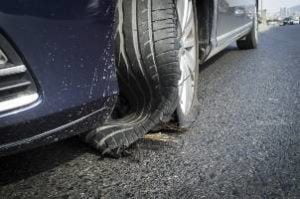
Filing a Claim for a Crash Caused by a Tire Blowout

blown out tire on road during dayDrivers have an obligation to ensure their vehicles are safe to operate. That means they need to ensure their vehicles do not pose an unreasonable risk of a crash.

That is why drivers need to make sure their tires are in good condition. Over or underinflated tires increase the risk of a blowout that could easily result in a crash. When a tire blows out, a vehicle becomes much more difficult to control.

Drivers need to make sure their tires are properly inflated and replace old tires when they become too worn down. Worn down tires can blow out, but drivers can also easily lose control of their vehicle because the tires cannot gain traction on the road.  Worn tread is worse in rain or snow conditions.

Below, we discuss tire blowout collisions, including liability and filing a claim if you were a victim of one of these crashes. Victims of these crashes should discuss the situation with a licensed attorney as insurance companies are always looking to underpay or deny claims.

What Causes a Tire Blowout Crash?

There are various reasons why a tire may blow out. Sometimes a tire blowout is not the driver’s fault. For example, a tire could get punctured by a rock or nail. As air slowly drains from the tire and the driver accelerates to a high speed, pressure can build up in the tire.

Blowouts can also be caused by:

Old Tires

Tires wear down over time, preventing them from expanding and contracting as they should because of temperature or pressure changes. Older tires can get more easily damaged and blow out.

Overloading

If a vehicle is carrying too much weight, it puts tremendous pressure on tires. Weight includes cargo and passengers. Worn tires are also at much greater risk from an overloaded vehicle.

Potholes

Sometimes a pothole can damage a tire so severely that it blows out. A pothole can cause a tire to expand or contract quickly.

Impact Damage

If you run over debris, a tire could blow out a mile or two later. The damage could be much worse than you initially thought.

Defective Tires

There may be a design or manufacturing flaw with the tire that causes it to break down. The tread can separate from the rest of the tire and cause a blowout.

What Happens When a Tire Blows Out?

The driver of a car that suffered a tire blowout will likely hear a loud pop when it happens. Your vehicle is likely to slow down a little as the blown tire is not going to continue rolling like normal. The vehicle is likely to pull toward the side with the blown tire, making the vehicle harder to control.

If your vehicle is carrying a lot of weight, it may be particularly difficult to gain control. It may be much more difficult to get the vehicle safely off the road.

These are all reasons why vehicles with blown tires are often involved in crashes. Drivers often panic and try to slam on the brakes, which is the worst thing you can do.

When the blowout occurs while the vehicle is traveling at high speed, the crash could involve multiple vehicles as other drivers may not be able to avoid a collision.

Liability for a Tire Blowout Collision

Often, the driver of the car that suffered the blowout bears fault for the crash that results. The driver may have over or underinflated the tire, left an old tire on the car or not dealt with damage to the tire, such as from a nail.

In some cases, the repair shop that worked on the vehicle could bear fault – maybe they over or underinflated the tires or failed to notify you the tires were old. Mechanics may be liable for failing to do proper repairs or at least notify the driver of a problem that could be a safety issue.

Other drivers may be at fault for negligence during the collision. For example, if you were in a multi-vehicle crash, another driver may have been distracted, speeding or failed to stay in his or her lane. If multiple parties are at fault, liability would be shared among those parties.

If the tire blowout was a result of manufacturer negligence, they may be held liable for your damages.

Fortunately, Minnesota drivers can seek compensation for medical bills and some other damages from their no-fault insurance. That means you can recover compensation no matter who is at fault.

Fault would be an issue in a claim against another driver’s liability insurance, which means your lawyer would need to prove another party caused your damages through negligence. Proving fault for a blown tire crash can be complicated, which is why you should strongly consider working with a lawyer. At TSR, there are no upfront fees for our services, and we do not collect our fees unless you get compensation.

Preventing a Tire Blowout

Preventing a blowout is mostly about doing routine maintenance on your vehicle. Your owner’s manual will say the proper pressure for the front and rear tires and the maintenance schedule should tell you when tires should be rotated.

Take the car to a mechanic you trust to determine when tires are too worn down to drive on. That way you know when tires should be replaced.

Use caution in areas where there may be a lot of debris, such as near a construction site. If you hit debris or a pothole, you may want to pull over and check your tires. You should also slow down to lessen the impact of debris on your tires.

Call TSR Injury Law Today to Discuss Your Crash

Have you been injured in a crash caused by another driver?

Our Bloomington car crash lawyers are ready to discuss your potential legal options in a free consultation. We have assisted many crash victims and have obtained millions on their behalf. We know this is a difficult time for you and how important it is to secure compensation for damages.

Give us a call today. We are ready to help. (612) TSR-TIME

How Memory Loss Could Impact Your Claim for Compensation

pointing pen at brain mriSometimes crash victims do not remember much of anything about their crash. Sometimes this is because they suffered a traumatic brain injury that has created gaps in their memory.

If someone was severely injured in the crash or the victim almost died, memory loss may be a side effect of the emotional trauma suffered by the victim.

There are other reasons someone may have impaired memory or no memory of the crash. Our attorneys discuss memory loss after a car crash below, including how it may impact a claim for compensation.

If you were injured in a crash, you can meet with one of our attorneys in a free consultation to discuss legal options. We have helped numerous crash victims and have a proven track record of securing compensation.

How a Crash Could Cause Memory Loss

A traumatic brain injury is one of the common reasons crash victims have memory loss. For example, crash victims often suffer concussions from a violent blow or jolt to the head. They could hit their head on the steering wheel, slam back into the headrest or strike their head on something else inside the car.  There have been cases where outside objects break through the windshield and strike victims in the head.

It is important to note a concussion could result from a crash in which the victim did not suffer a blow to the head. The victim’s head could get thrown forward and backward so violently that it causes the brain to move and hit the inside of the skull.

A severe concussion could impair short and long-term memory, so the victim may forget things that happened long before the crash, in addition to the crash itself.

Crash victims may also forget the incident because of:

  • Substance abuse/impairment – If the victim was impaired by alcohol or drugs, he or she may not remember what happened. This may affect the victim’s ability to seek compensation because the victim is likely at fault for the crash.
  • Cognitive impairment from before the crash – Older drivers may have cognitive impairment because of a condition like Alzheimer’s or dementia.
  • Emotional response/survival response – When someone is involved in a bad crash, such as one in which they nearly died or someone else died, they may forget about it as part of an emotional response. The brain is focused on survival instead of creating memories, which is why victims may not remember much about the crash.

Building a Case if You Cannot Remember the Crash

There are various pieces of evidence your lawyer may use to build your case for compensation. For example, the police report documents the crash and may indicate which driver the officer believes is at fault. If the other driver was issued a citation, it can go a long way in proving negligence.

Eyewitness testimony can also be useful, such as testimony from another driver or pedestrians who were in the area at the time of the crash. However, it depends on how reliable the witness is and what he or she was able to see.

There may be pictures of the crash taken by witnesses, law enforcement or others involved in the crash. These images may help your lawyer gain a better understanding of what happened.

Video footage of the crash can also help validate a case. For example, there may be a surveillance camera in the area that captured the crash. Traffic cameras may have also captured the collision.

If the vehicles involved have event data recorders, data from these devices can help the victim’s attorney determine what happened. These devices store a variety of data, including speed, braking, acceleration, deployment of airbags, use of seat belts and more.

It is also possible to reach conclusions about what caused a crash by analyzing damage to the vehicles involved. The location of damage could indicate that one driver was negligent by violating the other driver’s right of way. The amount and extent of damage could indicate how fast another vehicle was traveling. Your lawyer may bring in an accident reconstruction expert to further determine what the crash damage says about what happened.

How do Insurers View Crash Victims Who Have Memory Loss?

Car insurance companies are looking for some reason to deny a claim or diminish its value. They often do this by attacking the victim’s credibility. If the victim does not remember what happened, the insurance company may say there is no case. They may quickly deny the claim or make a lowball offer.

However, you can still seek compensation as there are other ways to validate your claim. You should discuss the situation with a licensed attorney. Some crash victims take the insurance company’s word for it even though they may still be able to obtain compensation.

If you have memory loss, it is probably a bad idea to talk to the insurance company. You may say something that hurts your case without realizing it. The attorneys at our firm know how to protect a claim when talking to insurance companies.

Contact TSR Injury Law Today to Discuss Your Crash

Give us a call to schedule a free consultation with a licensed Bloomington-based auto accident attorney. There is no obligation to hire our firm after this meeting, so there is no risk to you. We can explain how we may be able to assist you during this difficult time.

No upfront fees. No risks. Call today to learn more. (612) TSR-TIME

Liability for a Car Crash Caused by Loose Cargo

Although most vehicles on the road are loaded properly, sometimes, cargo can be improperly secured. Loose or falling cargo can create a dangerous hazard for other drivers. The cargo may fall off the back of a vehicle and cause a car crash, which may lead to serious injuries and significant property damage.

If you or a loved one were injured in a car crash caused by loose cargo, it is important to understand your available legal options. An initial consultation with a vehicle accident lawyer in Bloomington is free of charge and comes with no obligation to retain our services. We only get paid if we help you recover compensation.

Call (612) TSR-TIME for legal help today.

Negligence in Securing Cargo on a Vehicle

Negligence can result in devastating car crashes. A driver who does not properly secure cargo to his or her vehicle may be deemed careless or negligent. Perhaps the driver loading and transporting the cargo felt that the cargo would be too heavy to shift and did not need additional strapping.

Regardless of his or her reasoning, loose or unsecured cargo can cause significant damage, particularly when it was on a car traveling at a high rate of speed. Cargo that can create a dangerous road hazard includes, but is not limited to:

  • Furniture, such as mattresses and dressers
  • Appliances, such as refrigerators and washing machines
  • Equipment, such as work tools and wood
  • And more

Cargo can sometimes fall off a vehicle and onto the road. The cargo may hit a vehicle or injure an occupant in the vehicle or cause the driver to lose control of his or her vehicle and crash. Crashes may also happen because another driver tries to swerve out of the way to avoid hitting the fallen cargo.

Loose cargo may also fall on top of a vehicle’s hood or go through the vehicle’s windshield. The injuries sustained can be life-threatening.

Improperly secured cargo may even cause issues if it remains in the vehicle. When cargo is not evenly distributed, it can make the vehicle harder to control and increase the risk of a crash. Unsecured cargo that shifts inside a vehicle may cause it to tip over.

State Law on Securing Cargo

Section 169.81 of the Minnesota Statutes outlines the proper way to load and secure cargo to vehicles. A vehicle cannot be driven on any highway carrying cargo unless it has been securely covered. The cargo must be secured well enough to prevent it from dropping, shifting, leaking, blowing or escaping.

If a cargo shifts and falls off one vehicle and hits another vehicle on the road, the driver carrying the cargo may not be automatically liable for damages. A car crash may still happen even if the assumed at-fault driver did anything and everything possible to secure the cargo properly to his or her vehicle.

Liability is also often shared by multiple parties. The party that loaded and secured the cargo may have loaded the cargo incorrectly or failed to use adequate tie downs or other devices to secure the cargo.

If you have been harmed due to someone else’s negligence, you may have grounds to pursue a legal claim to help cover your medical bills and lost wages. It may be in your best interest to speak with an experienced lawyer who can protect your rights and help you prove the other driver’s careless actions.

Do Drivers Have a Duty to Avoid Fallen Cargo?

Every driver has a legal duty to operate his or her vehicle safely and responsibly. Part of this legal duty is to be alert on the road and look for any potential hazards. All drivers should  to take precautions to avoid fallen cargo:

  • The driver was following the vehicle with the cargo too closely
  • There was some sort of warning that the cargo was in danger of falling and the driver behind the vehicle with the cargo had sufficient time to react

If the driver kept a safe following distance and was not aware of any known potential hazards, a car crash caused by loose cargo would have more than likely been out of the driver’s control.

Ways to Stay Safe on the Road in Minnesota

Drivers who decide to transport any cargo on their vehicles must make sure that the cargo is properly secured before getting on the road. Some safety measures that should be taken include:

  • Covering the cargo with secured tarps
  • Using thick rope and vehicle tie downs
  • Not overloading the vehicle with cargo
  • Inspecting the cargo between stops

Ways you could also stay safe and help reduce the risk of a car crash include:

  • Remaining alert and focused at all times
  • Slowing down if you spot potential road hazards
  • Avoiding tailgating so you have time to make evasive maneuvers

Reach Out to Our Firm for a Free Case Review

Loose cargo can cause serious car crashes. If you or someone you care about has been injured or killed in a crash, our lawyers at TSR Injury Law are here to help. You may be able to pursue compensation to help cover your medical bills, lost wages and other crash-related losses.

Contact us to learn more about how we may be able to help. The initial consultation we offer costs nothing so there is no risk to you. If we determine that you have a valid claim, there are zero upfront fees to hire our firm. We only get paid if we help you obtain compensation via a settlement or verdict.

Licensed. Local. Lawyers. Ph: (612) TSR-TIME.

Why Car Insurers May Wrongly Assign Fault to the Victim

Current image: insurance adjuster inspecting damaged car social|insurance adjuster reviewing damage to car

Car crashes are usually the result of negligent driving. Many accidents are caused by speeding, distracted driving, violating another driver’s right of way or tailgating.

Car insurers know this, but they often blame crash victims for things that are unrelated to the cause of the collision. Below, we discuss when car insurers may have wrongly assigned fault to the victim of a crash.

Our Minneapolis-based car crash lawyers have many years of combined experience dealing with insurance companies. We know the tactics they use to try to devalue or deny claims. We also know how to aggressively pursue the full compensation crash victims need.

Minnesota’s Comparative Fault Law

Even though Minnesota is a no-fault state, fault is always an issue during a car crash claim. The at-fault driver’s insurance company has an incentive to minimize its liability for your damages.

If the insurance company can prove the victim shares some blame, they can devalue his or her claim under Minnesota’s comparative negligence law. This law says the value of the victim’s claim is reduced based on his or her percentage of fault for the crash.

For example, if you are found to be 10 percent at fault, the value of your claim could be reduced by 10 percent. If your percentage of fault is greater than the at-fault driver’s percentage of fault, you are barred from recovering any compensation no matter how injured you are.

Reasons Insurers May Give for Assigning Fault

There are various reasons car insurance companies may assign fault to crash victims, including:

  • Distracted driving (texting and driving, not paying attention to the road, etc.)
  • Speeding
  • Failing to yield the right of way
  • Tailgating
  • Drowsy driving or falling asleep at the wheel
  • Disobeying a traffic signal or stop sign

These are legitimate reasons to assign fault to a victim. The insurance company would need to provide evidence to prove the victim was engaged in some form of negligent driving.

However, insurance companies may assign fault for other reasons, such as:

Your License Plate Was Expired

It is certainly negligent to drive with an expired license plate, and you can be fined for failing to renew your registration before the deadline. However, your expired license plate is unrelated to what caused the crash to happen.

If the insurance company tries to use this as an excuse to deny or devalue your claim, you should contact an attorney for assistance.

You Received a Traffic Citation for Something Unrelated to the Crash

Traffic citations can impact car crash claims. However, it all depends on what the citation was for. If you were rear-ended and one of your taillights was not working, that may be a reason to deny or at least devalue your claim.

If you were cited for an expired license plate or expired license, it should not affect the value of your claim. Even in a first-party claim, your expired license may not matter, unless your policy says coverage is voided if you have an expired license. However, in most cases, all that matters is if you had a valid license at the time that you bought or renewed your policy.

You Were Not Wearing a Seat Belt

Minnesota law prohibits the use of evidence of not wearing a seat belt in a personal injury case. That means not wearing a seat belt cannot be used against you to assign fault for the crash.

It could certainly be argued that not wearing a seat belt made your injuries worse. Studies have shown that wearing seat belts can dramatically reduce the risk of death or severe injury in a crash. However, the central issue is what caused the crash. The decision to not wear a seatbelt is unrelated to what caused the crash.

It is important to take what the insurance company says with a grain of salt. They have an interest in assigning fault to you because it may reduce the value of your claim. That means less money out of their pocket. Unfortunately, that may also mean less money in your pocket.

If the insurance company makes claims about your role in the crash, you should discuss those claims with a licensed attorney. Unlike the insurance company, the attorneys at our firm are committed to your best interests.

TSR Injury Law is Ready to Help. Contact Us for Assistance

For more than two decades, the attorneys at TSR Injury Law have been helping those injured in motor vehicle crashes. We have vast experience negotiating with insurance companies and are prepared to go to trial if necessary to secure the compensation our clients need.

An initial legal consultation is free of charge, and there is no obligation to take legal action after this meeting. If you decide to hire our firm, there are no upfront fees. That means working with us does not come with financial risk.

Call us today to learn more: (612) TSR-TIME

Legal and Ethical Obligations Your Injury Lawyer Has to Your Case

injured man shaking woman's handThere are many reasons injury victims may benefit from hiring an attorney to help them seek compensation for their damages. For example, attorneys have legal and ethical obligations that are meant to protect injury victims and help ensure your case is handled in a competent manner.

Below, our experienced attorneys discuss some of these obligations and how they benefit clients. If you were injured in an accident and are considering seeking legal representation, you should review these obligations.

At TSR Injury Law, we are deeply committed to pursuing the justice and compensation injury victims need and managing cases with the utmost professionalism. If you have legal questions or concerns after suffering an injury, our Bloomington personal injury attorneys are ready to help.

Give us a call today to learn more: (612) TSR-TIME.

Providing Competent Representation

Your choice of an attorney is one of the most important decisions to make following an injury caused by another’s negligence. You need an attorney who is capable and can manage your case and defend your best interests.

However, the attorney needs to consider if he or she is capable of competently managing your case. That means the lawyer needs foundational knowledge of how to establish liability and build a strong case. Lawyers can still consult with others at their firm on a case, but they should still be able to manage the case.

Competence is not only about legal knowledge but also resources. Your attorney should have the resources to investigate the accident and gather evidence.

If a lawyer does not have the competence for the case, he or she may have an obligation to seek help from another attorney who is more qualified. If you meet with an attorney who has not managed a case like yours before or mainly works on cases in a different practice area, he or she may be obligated to inform you of that, so you may choose to work with another attorney.

At TSR Injury Law, we take on personal injury cases and have done so for more than 20 years. We have secured well over $1 billion on behalf of our clients.

Acting Ethically

Your lawyer needs to manage your case in an ethical manner. For example, conflicts of interest should be disclosed, and lawyers should not take cases where these conflicts exist. Acting ethically also means being honest and forthcoming with clients about their cases, as well as following the laws pertaining to personal injury cases.  You should be told both good and bad news by your attorney.

Acting in the Best Interests of the Client

Lawyers have an obligation to act in your best interest. For example, if a lawyer thinks you should accept a settlement offer because it provides the compensation you need, the lawyer should tell you that. On the other hand, if a settlement offer is too low, your lawyer should tell you that also. You do not want a lawyer giving settlement advice because they need to pay rent.

If the insurance company does not offer a fair settlement after negotiations, your lawyer may discuss taking the case to court. However, your lawyer must explain if he or she thinks going to court would be a good or bad idea. Your lawyer needs to explain what the result of going to court may be or what it is likely to be.

Your lawyer should not urge you to go to court or accept a settlement offer if he or she thinks it is a bad idea. Your lawyer should also not file a lawsuit unless you have agreed to do so, and you agree with your lawyer’s assessment of the case.

Your lawyer’s advice to you should be based on your needs and not the needs of his or her firm.

TSR, like most personal injury law firms, takes cases on contingency. That means we do not charge upfront fees. We are not paid unless our clients get paid. Our interests are aligned with your interests and there is no financial risk in hiring us to represent you.

Honest and Consistent Communication About the Case

Your attorney has an obligation to keep you informed about your case. He or she needs to provide accurate and honest communication about what is happening with your case and answer your questions in a reasonable amount of time. Your lawyer is legally obligated to inform you about settlement offers the insurance company makes.

Honest, consistent communication helps to build trust between the attorney and the client. The client is likely to feel more comfortable reaching out to his or her attorney if the attorney responds quickly. The client will likely have a more positive view of his or her experience if there was good communication in addition to a favorable result in the case.

If there are things you can do to help your lawyer, your lawyer should inform you. There are various questions your lawyer may have about your case and if the answers to those questions would help your lawyer do a better job managing your case, your lawyer should ask you those questions.

Protecting Attorney-Client Privilege

Attorneys are legally required to keep conversations about your case confidential. This is part of attorney-client privilege. This applies to conversations and communications about the case that fit certain criteria.

Attorney-client privilege helps to encourage open and honest communication between attorneys and clients. This can benefit your case because your attorney will be well-informed about your situation, and this helps when preparing a strategy.

TSR Injury Law is Ready to Help. Call Today

For decades, our firm has been helping injury victims obtain compensation for damages. We have obtained millions on behalf of our clients in various cases.

We work on contingency, which means there are no upfront fees for our services and the initial consultation is free. We do not get paid unless you get paid.

TSR is here to help injured victims. Contact us: (612) TSR-TIME.

What if Your Car Crash Claim Exceeds the Value of Your Car Insurance Policy?

While some car crash injuries may heal in a few weeks or months and leave victims with no long-term damage, others can affect victims for years or the rest of their lives. Unfortunately, the financial value of damages from these injuries could far exceed the value of the victim’s auto insurance policy.

If this happens to you, are you stuck paying these additional costs out of your own pocket? Are there other options for recovering additional compensation?

Our experienced Bloomington-based vehicle crash lawyers discuss this issue in detail below. There may be a variety of options for securing compensation above policy limits.

At TSR Injury Law, we have helped many car crash victims secure compensation to cover the full cost of their damages. We offer victims a free initial consultation and if you decide to hire our firm, there are no upfront fees. Our attorneys are not paid for providing legal services unless our clients receive compensation.

Securing Compensation After a Minnesota Car Crash

Minnesota requires all drivers to purchase personal injury protection (PIP) coverage. This is no-fault coverage, which means drivers can use it even if they are at fault for the crash. Typically, crash victims file a claim for PIP benefits before other types of claims.

PIP provides compensation for medical care you need following the crash. This may include the cost of:

  • Surgeries
  • Medications
  • Rehabilitation
  • Stays in the hospital
  • Transportation in an ambulance
  • Medical equipment
  • Medical tests
  • Appointments with doctors
  • Mileage to and from treatments
  • Chiropractic appointments

Basic mandatory PIP medical coverage is $20,000.00. You can buy more or “stack” benefits if you own multiple cars. PIP also provides compensation for lost wages and the cost of hiring someone to perform household services, like housekeeping. Wage and replacement service coverage is in addition to medical coverage. Basic PIP also provides $20,000.00 for these services.

Options if Your Damages Exceed PIP Insurance Limits

Minnesota requires drivers to buy a minimum amount of liability insurance in case they cause a crash that results in damages. The minimum required coverage is:

  • $30,000 per person for bodily injuries
  • $60,000 per crash if two or more people get injured
  • $10,000 for property damage

However, it is important to remember a liability insurance claim is not a no-fault claim. Therefore, your lawyer must prove the other driver is liable for your damages and certain thresholds must be met before a person can receive compensation for pain and suffering from the at-fault driver’s insurance (above and beyond the no-fault PIP coverages).

Under certain circumstances, you may be able to step outside of the no-fault system and make a pain and suffering claim against the at-fault driver. For example, if you have more than $4,000 in medical bills or suffered one of the following types of injuries:

  • Permanent injury
  • Scarring
  • Disfigurement
  • Injury that causes you to miss 60 days of work
  • Fatal injury

What if the Other Driver is Uninsured or Underinsured?

In this situation, you may file a claim against your own policy for underinsured or uninsured coverages. These are mandatory coverages for at least $25,000 per person $50,000.00 per crash.

An underinsured motorist coverage claim is meant to pay for damages that exceed the value of the at-fault driver’s liability coverage.

More Options if Your Damages Exceed Policy Limits

Another option is the at-fault driver’s umbrella insurance. Some policies provide umbrella insurance in case their insured causes a serious crash, as their car insurance coverage may run out before it covers the victim’s damages.

Drivers buy umbrella insurance to protect their assets, because when their auto insurance coverage runs out, victims and their attorneys may come after the at-fault driver’s assets.

Sometimes car crashes involve more than two vehicles. In these situations, you may have a claim against both driver’s liability insurance, with each paying for their percentage of fault.

There may also be a third party besides another driver that bears some responsibility for your damages, such as a government entity responsible for maintaining a roadway. However, you would need to establish that entity’s fault for the crash and your damages, which may be a challenge. That is why it is vital to hire an experienced attorney with extensive knowledge of the law.

Need Legal Assistance Following a Crash? Call TSR Today

For decades, our licensed attorneys have been assisting those injured in accidents, including motor vehicle crashes. We know how difficult the aftermath of these situations can be and how important it is for victims to secure compensation for things like medical treatment and lost wages.

If you or a loved one were injured by another’s negligence, our attorneys may be able to assist you. We are ready to discuss what happened in a free consultation to explain how we may be able to help during this difficult time.

TSR Injury Law. No Upfront Fees. No Financial Risks. (612) TSR-TIME

What Happens if an Injury Victim Passes Away During an Active Lawsuit?

placing flower on top of gravestoneSome injury victims pass away before their personal injury lawsuit is resolved. For example, a nursing home abuse victim may pass away before a lawsuit concludes. Their cause of death may be related to the injury that is the subject of the lawsuit or an unrelated reason.

Even though the plaintiff in the lawsuit passed away, the lawsuit will continue until there is a resolution, right?

This is an important question, and it emphasizes the need for having a knowledgeable attorney handling your case. An experienced lawyer understands what may be possible in this type of scenario.

At TSR Injury Law, our Bloomington-based personal injury lawyers have been helping injury victims seek compensation for more than two decades. We are always prepared for a trial and have helped many injury victims secure compensation in court.

An initial consultation is free and there is no obligation to hire our firm.

What Does Minnesota Law Say?

In Minnesota, if the victim dies from injuries caused by the negligent act, the victim’s case becomes a wrongful death lawsuit. Minnesota Statute 573.02 says that a lawsuit may be pursued by the Trustee of the decedent if it was not finally determined while the decedent was alive. However, the lawsuit will be for the exclusive benefit of the surviving spouse, parents and children of the deceased. Minnesota statutes make it clear there is a claim for economic loss and loss of aid society and companionship the heirs lost from the death of their relative.

Anyone can be chosen as a Wrongful Death Trustee, but a Judge must accept the Petition and all heirs to the deceased must be given notice and have the opportunity to be heard. Usually, a parent or spouse of the deceased is chosen by the family to represent them, but the Trustee can be anyone the family trusts to proceed with the legal case.

What if the Death was Caused by Something Unrelated to the Injury?

Minnesota Statute 573.02 Subd. 2. Injury action says the trustee appointed for the deceased can maintain legal action for special damages (economic damages) that arise out of the injury if the decedent would have had grounds for a lawsuit if he or she had survived. The surviving spouse or one of the children can petition the court to appoint someone as trustee to file a lawsuit.

However, it is important to note the claim cannot include non-economic damages, like pain and suffering for the deceased or loss of aid society and companionship for the heirs. That means victims cannot pursue full compensation for all the damages they suffered.

As this is a complex situation, it should be discussed with an experienced attorney.

Wrongful Death Lawsuits

The purpose of this type of lawsuit is to recover compensation for the economic and non-economic damages caused by the victim’s passing. This may include:

  • Medical expenses incurred by the deceased before his or her death
  • Lost wages
  • Lost benefits
  • Loss guidance
  • Pain and suffering endured by the victim before death
  • Funeral expenses
  • Burial expenses
  • And more

There is a short deadline for a wrongful death lawsuit to be filed and only certain people have the right to pursue such a case. If your loved one died due to another’s negligence, we may be able to help you seek compensation.

Contact Us Today to Discuss Potential Legal Options

If you or a loved one were injured by another’s negligence, we are prepared to help. Give us a call to discuss what happened and learn how we may be able to assist you.

Our firm has secured $350 million in compensation on behalf of Minnesota injury victims in a variety of cases. We charge no upfront fees, and we do not get paid unless you get paid at the end of the legal process.

Millions Recovered. No Upfront Fees. Call (612) TSR-TIME.

What are the Benefits of Settling a Claim as Opposed to Going to Court?

writing on legal documentMany personal injury victims fear calling a lawyer because they think they will have to go to court to recover compensation for their damages. While there are cases that make it to court, most are resolved through a settlement and a trial is not necessary.

There are many advantages to settling a case as opposed to going to court. The experienced attorneys from TSR Injury Law discuss those advantages below.

If you have questions about what to do after suffering a personal injury caused by another’s negligence, we are here to help. We have negotiated countless settlements on behalf of our clients.

We understand injury victims are often uncertain about calling a lawyer, but you can speak with one of our licensed attorneys for free and with no obligation to hire our firm. If we validate your claim and you decide to work with us, there are no upfront fees and no costs while we work to help you resolve your claim.

TSR Injury Law. No Upfront Fees. Proven Results. Call (612) TSR-TIME.

What is a Personal Injury Settlement?

A settlement is essentially a legally binding contract between the two parties involved in an injury claim. The liable party agrees to provide compensation to the injury victim in exchange for the injury victim agreeing to not bring future claims over the same injury.

Settlements are usually reached after negotiation between the two parties, often the attorney for the victim and the liable insurance company. The negotiation process starts with the victim’s attorney sending a demand letter to the insurance company. In response, the insurance company can make a counteroffer and there may be multiple counteroffers between both parties before an agreement is reached.

While most settlement agreements are reached before a lawsuit is filed, there are times when the insurance company does not make reasonable efforts to settle the dispute. When this happens, you need an attorney on your side who is willing to file a lawsuit to pursue the compensation you need.  That is why it is important to find a Bloomington personal injury attorney with courtroom experience who is prepared to take the case to court.

It is important to note that you may still be able to reach a settlement agreement with the insurance company, even if you have filed a lawsuit.

Advantages of Agreeing to a Settlement

These are some of the benefits of settling an injury claim as opposed to taking it to court:

Control of the Process

One of the biggest advantages of settling an injury claim is you and your attorney are in control of negotiations. If you do not like an offer from the insurance company, you can reject it and make a counteroffer. You can go back and forth with the insurance company until you reach an agreement.

Trials can be unpredictable. What if the judge excludes evidence? What if a witness’s testimony sounds unreliable?

Settling is Faster

Another advantage to settling is it takes less time to reach a settlement than to finish a trial.

A trial adds six months to a year or more to reach a conclusion. Even if you get a favorable result, the insurance company might appeal. That can drag the process out even longer.

When you settle, there is no possibility of an appeal. Signing a settlement offer resolves the situation and a check is received within weeks.

Lower Costs

Settling a case also costs less than a trial. When you go to court, there are various court costs and expenses that add thousands of dollars to the case. The goal is to get more compensation, so the added costs are a reward risk situation. No one wants to spend $10,000.00 more in costs to “win” another $10,000.00.

Going to court is costly for the insurance company as well, which is why it is often in the best interest of the insurance company to agree to a settlement. However, insurance companies may stick to a lowball offer if the victim’s attorney rarely or never takes cases to court. The insurance company knows there is little to no risk of the outcome of the case being put in the hands of a jury if the victim’s attorney never goes to trial. The greatest threat is eliminated, and the insurance company acts accordingly.

That is why it is important to have an attorney with trial experience on your side. Our attorneys have decades of experience negotiating settlement claims as well as building strong cases to present in court.

Less Stress for Victims

Trials are much more stressful for injury victims than the settlement process. During the settlement process, victims are mostly free to focus on their medical treatment. Their attorney can keep them informed throughout the process and deal with all the things involved in negotiating and trying to reach a settlement. Trials require giving testimony in front of a jury, insurance lawyers cross examinations, adverse doctor exams and the unknown of what 12 jurors will think about the case.

Ensuring You Recover Compensation

While it may be possible to recover more compensation from a trial compared to a settlement, settling ensures you receive compensation. When you go to trial, you are leaving the case in the hands of a jury. They may award you more than you would have recovered in a settlement, but there is a chance you may not recover anything.

Privacy

Settlements are also private. Both parties can decide what should remain public and private, such as the terms of the settlement. Trials become part of public record. In other words, everything the two sides said to make the other look bad will be available for anyone to look up.

Contact TSR Injury Law for Legal Assistance

For more than two decades, our licensed attorneys have been helping injury victims recover the compensation they need. While many cases settle, we are always prepared to go to court, as our goal is recovering full compensation to help you move forward.

There are no upfront fees for our services, and an initial consultation does not obligate you to hire our firm. This meeting is a chance for us to lay out your potential legal options to help you decide what to do next.

Licensed attorneys. No upfront fees. Call TSR at (612) TSR-TIME.

Why Speeding is a Factor in Many Minnesota Car Crashes

driver exceeding speed limit time lapseSpeeding kills thousands of people on U.S. roads every year. In 2019, an average of more than 25 people per day were killed in traffic crashes involving speeding. More than one-quarter of the total traffic deaths that year were caused by crashes in which speeding was a factor, according to statistics compiled by the National Safety Council.

Speeding is a factor in a crash if the driver was cited for a speeding-related traffic offense, was driving too fast given the conditions, or exceeding the posted limit.

Our licensed attorneys explain the dangers of speeding and why it often makes a crash much more likely to happen. We also discuss some ways you can reduce your risk of a crash involving speeding drivers.

If you were injured in a crash caused by speeding, give our firm a call today to learn how our Minneapolis auto accident attorneys may be able to assist you. The damages caused by these crashes are often catastrophic and victims who do not retain a licensed attorney often struggle to recover all the compensation they may need.

Why is Speeding So Common?

There are a lot of behaviors and bad habits that people know are dangerous, but they engage in them anyway. Smoking cigarettes is a prime example, as there is so much evidence smoking can have severe or even life-threatening consequences.

People also know speeding is a bad idea, but they still do it, often on a regular basis. There are various reasons why. However, it is important to remember drivers are making a conscious decision to speed, or at the very least, not slow down when they realize they are exceeding the speed limit.

Common reasons drivers speed include:

  • Running late on a commute to a job, school or an event that starts at a specific time, such as a concert, sporting event or a movie
  • Being distracted by something and ignoring the speedometer; common distractions include texting while driving, talking to passengers, fiddling with the stereo, eating or drinking.
  • Being angry at being stuck in traffic – once traffic clears and drivers have more room they often speed to make up for the time they lost while they were stuck in traffic
  • Being under the influence of drugs or alcohol often causes drivers to engage in reckless behaviors, like speeding
  • Complete disregard for any traffic laws, which means they constantly break traffic laws and speed, even in places with low-speed limits, such as parking lots and neighborhoods
  • Feeling like they can get away with it because they feel less constrained being inside a car
  • Lacking driving experience, which may result in speeding without realizing it
  • There are more drivers on the road driving more miles than ever before

Exceeding the speed limit is a negligent behavior, and not just because it is against the law. Speeding is irresponsible because it makes it easier to lose control of your vehicle and gives you less time to react to avoid a crash.

You are obligated to follow traffic laws and operate your vehicle in a reasonably safe manner to help prevent injuries to yourself and others you are sharing the road with. Even though drivers may feel detached from others because they are in a car, they must consider others when making decisions about the operation of their vehicle.

Why Does Speeding Make a Crash More Likely to Occur?

Despite alarming statistics and warnings about the dangers of exceeding the speed limit, many people still do not understand the risks involved.

Below, we discuss why speeding can greatly increase your risk of a crash:

  • Higher risk of losing control of your vehicle – The faster you go the harder it is to maintain control of your vehicle. If you are speeding and you move the steering wheel just a little too much, you could start to lose control. If you jerk the steering wheel while you are speeding, your car could start to spin or even rollover. Rollovers are particularly common in larger vehicles with a higher center of gravity, like SUVs and large trucks. Small mistakes are magnified when you are speeding. A small mistake at a slower speed is often much easier to correct.
  • Increase in stopping time – The faster an object is moving, the longer it will take to stop. When you speed, you are giving yourself less time to stop as you approach a dangerous situation on the road. No matter how hard you press down on the brakes, you may not have enough time to stop to avoid danger. That is why speeding drivers often cause rear-end crashes. They run out of time to stop to avoid hitting the bumper of the car in front of them.
  • Increased risk of a rollover crash – Speeding on a turn is never a good idea, but it is an especially bad idea in a taller vehicle like an SUV or crossover. Speeding while turning in one of these vehicles could cause the vehicle to tip in the opposite direction of the turn.
  • Less control in bad weather – No matter how fast you are going, controlling your vehicle in bad weather is going to be more difficult. Speeding just makes things even more dangerous. Your tires are going to have more trouble maintaining traction in rain or snow. Speeding only makes this problem worse. It is important to give yourself more time to react in bad weather, particularly because there are other negligent drivers who could make things more dangerous.

What Can You Do to Avoid Speeding Drivers?

Sometimes it is impossible to avoid a crash with a reckless driver. You could end up in a crash through no fault of your own. Fortunately, there are some preemptive steps you may be able to take to lower your risk of a crash with a speeding driver.

  • Watch for negligent drivers – It is incumbent on you to be aware of your surroundings and the drivers surrounding your vehicle. Noticing a negligent driver may give you the time you need to move away and potentially avoid a crash.
  • Move away from drivers who are speeding – You can either slow down or try to change lanes to move away from a driver who is speeding. If a speeding driver is behind you, change lanes to allow him or her to pass.
  • Avoid eye contact – It is important to avoid eye contact with negligent drivers, particularly those who look angry. Eye contact could make the driver even angrier and lead to a road rage incident.
  • Call the police to report reckless drivers – If you see a reckless or speeding driver, and you can get the license plate as the driver passes, call the authorities. They may be able to pull the driver over and issue a citation. Getting the driver off the road even for a few minutes could help prevent a crash.

Injured by a Negligent Driver? Give TSR a Call Today

For more than two decades, our firm has been helping car crash victims secure compensation to help them put their lives back together. We helped many crash victims reach favorable settlements with insurance companies and have also taken many cases to court to secure the justice and compensation our clients were seeking.

There are no upfront fees or obligations with our services. Our attorneys are not paid for representing you unless you are compensated.

TSR Injury Law is here to help crash victims. Call (612) TSR-TIME.